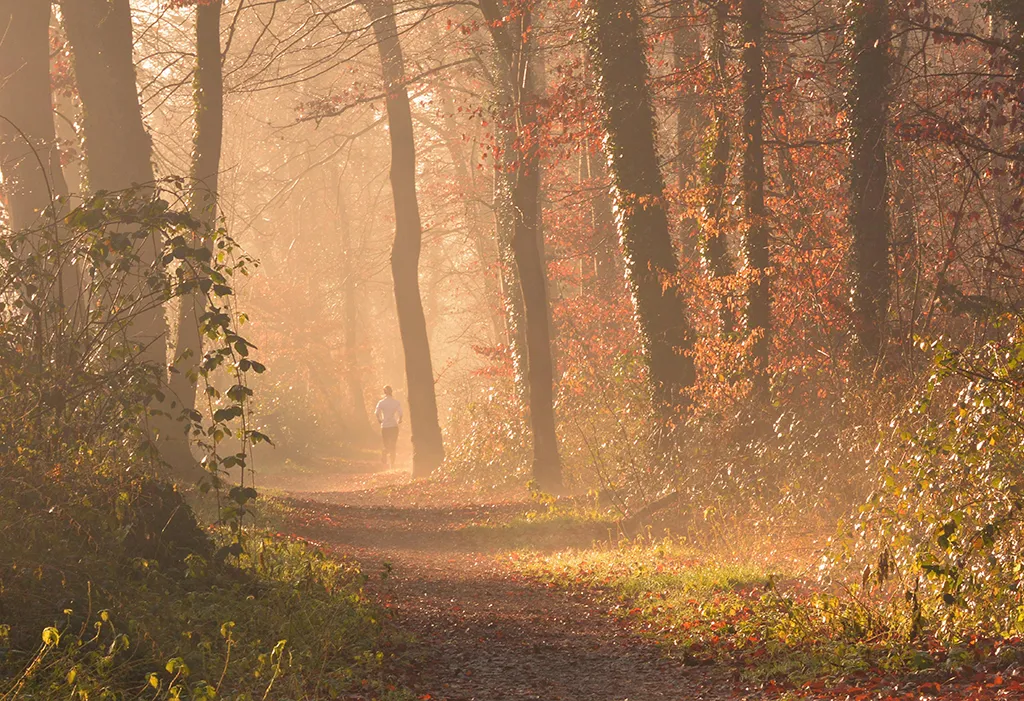
It is dark when you leave for work and dark when you come home. The pavements are icy, the wind is raw and the sofa is warm. Every year, around this time, many people's training slowly fades out, and in March they are starting over from scratch.
It does not have to be that way. Winter is actually when training does the most good. It lifts your mood in the darkest months, protects you against the weight that tends to creep on during the holidays and keeps your fitness and strength intact until spring. The trick is not to find more willpower, but to make training easier to do than to skip.
Motivation comes after you start
Many of us wait to feel motivated before we train. But motivation is a feeling that comes and goes, and in November it mostly goes. Research on behaviour shows that the people who keep training do not have more motivation. They have habits, and habits do not depend on how you feel that day.
- A habit takes time. In a well-known study from University College London, it took on average 66 days before a new daily behaviour became automatic, with a range from 18 to over 250 days. So start now, and by February the training will be part of your routine.
- Missing one day does not matter. The same study found that an occasional missed day did not affect the habit. What matters is getting back on track the next time. Never miss twice.
- Motivation often comes once you have started. The hardest part of a session is getting out of the door. Once you are moving, the body releases endorphins and other signals that make you feel better, and most people are glad they went.
Six research-backed tricks
- Make an if-then plan. Do not just decide "I will train more". Decide exactly when, where and what: "On Monday, Wednesday and Friday at 6.30, I will do 30 minutes of strength training in the living room." In a British study, 91 percent of those who wrote such a plan exercised at least once a week, compared to around 35–38 percent of those who only had the intention.
- Lower the bar. Use the ten-minute rule: put on your clothes and train for ten minutes. If you still want to stop, you may. You will rarely do it. Ten minutes is far better than nothing.
- Prepare the night before. Lay out your training clothes, pack the gym bag and fill the water bottle. Every obstacle you remove in advance is one less excuse in the morning.
- Combine it with something you like. Save your favourite podcast, audiobook or series for training only. In an American study, this "temptation bundling" increased gym visits by around 50 percent at first.
- Train with someone. A training partner, a group or a running club makes it harder to cancel, and more fun. You are less likely to let someone else down than yourself.
- Track it visibly. A cross in the calendar for every session. After a couple of weeks, you will not want to break the chain. Or use your training diary, see our Tools.
Set a goal for the spring
Winter feels long when there is nothing at the end of it. Give yourself something to look forward to: a spring race like Göteborgsvarvet in May, a hike, a summer trip or simply a number on the bar. Then break it down. Process goals such as "three sessions a week" work better day to day than outcome goals like "minus five kilos", because you control them fully. Read more in Motivation plan – your first two months.
Training against the winter dark
Many people feel heavier, more tired and lower in mood during the darkest months, and for some it develops into actual winter depression. Exercise is one of the best tools we have:
- Exercise works against depression. A large analysis of over 200 studies in the BMJ (2024) found that walking or jogging, yoga and strength training all had a clear effect on depression, comparable to talking therapy. The effect was greater with higher intensity.
- Get out in the daylight. Even on a grey winter day, the light outdoors is usually 10 to 50 times stronger than indoors. A walk or a session outside around lunchtime helps both mood and sleep rhythm. See Powerwalk and 10,000 steps.
- Think about vitamin D. In Sweden, the sun is too low to produce vitamin D in winter. Read Vitamin D in the winter dark.
- Protect your sleep. Regular training helps you fall asleep, but avoid hard sessions late in the evening if they keep you awake. More in Recovery and sleep.
If the low mood lasts more than a couple of weeks, or affects your everyday life, talk to your health centre. Exercise helps a lot, but it does not always replace other treatment. See also Mental health and stress management.
Dress for the cold – three layers
"There is no bad weather, only bad clothing" is a Scandinavian cliché for a reason. Dress in layers you can take off as you warm up:
| Layer | Purpose | Choose |
|---|---|---|
| Inner layer | Wicks sweat away from the skin | Merino wool or synthetic. Avoid cotton, which stays wet and cold. |
| Middle layer | Insulates | Fleece or thin wool, depending on the temperature. |
| Outer layer | Protects against wind and wet | A light, windproof jacket that breathes. |
- Dress as if it were 10 degrees warmer. You should feel slightly cold for the first few minutes. If you are warm at the start, you will be soaked after ten minutes.
- Protect hands, head and ears. Gloves, a hat or headband and a buff around the neck.
- Grip and visibility. Shoes with good grip or ice grips, reflectors and a headlamp in the dark. See Balance and fall prevention.
- Change quickly afterwards. Wet clothes cool you down fast. Get into something dry and warm as soon as you are done.
Train safely in the cold
- Warm up longer. Cold muscles and joints are stiffer. Give the warm-up 10–15 minutes, preferably indoors, and start slowly.
- Breathe through a buff in very cold weather. Cold, dry air can irritate the airways and trigger asthma symptoms, especially during hard efforts below about minus ten degrees.
- Drink, even if you are not thirsty. The cold dampens the thirst signal, but you still lose fluid through sweat and breathing.
- Take care with your heart. Cold raises blood pressure and makes the heart work harder. If you have heart disease or high blood pressure, avoid sudden heavy efforts in the cold, such as shovelling heavy snow, and talk to your doctor about what suits you.
- Listen to the body. Numb, white patches on the face or fingers are a sign of frostbite. Get indoors and warm up gently.
Indoors or outdoors? Both
The best winter training is a mix. Outdoors you get daylight, fresh air and a mental reset. Indoors you can train in any weather and focus on strength, which is extra important after 50.
- Outdoors: powerwalks, running, cross-country skiing, skating, snowshoeing or a long walk in the forest at the weekend.
- Indoors: strength training at the gym or at home with kettlebells and bodyweight, swimming, spinning, yoga and intervals. See Home training with kettlebell, Strength training for beginners and Interval training.
- Have a plan B. Decide in advance what you do when it pours with rain or the ice is treacherous: a 20-minute home session instead of the run. Then the weather never becomes an excuse.
A simple winter week
| Day | Training |
|---|---|
| Monday | Strength, 30–45 minutes (gym or home) |
| Tuesday | Powerwalk at lunch in daylight, 30 minutes |
| Wednesday | Strength, 30–45 minutes |
| Thursday | Intervals indoors or outdoors, 20–30 minutes |
| Friday | Rest or mobility and stretching |
| Saturday | Long outdoor session: forest walk, skiing or a run, 45–90 minutes |
| Sunday | Strength or yoga, 30 minutes |
Too much? Start with three days: two strength sessions and one outdoor session. That is enough to keep your fitness and strength through the winter.
The holidays – keep a minimum
December is full of parties, travel and late nights, and that is how it should be. But do not let the training stop completely. Decide on a minimum level for the busy weeks, for example two short sessions and a daily walk. It keeps the habit alive and makes January much easier. Read more in Christmas food without guilt.
Three simple steps
- Book your sessions in the calendar for the coming week: day, time and what you will do.
- Use the ten-minute rule on days when you do not feel like it. Start, and then decide.
- Get out in the daylight at least a few times a week, and set a goal to look forward to in the spring.
Winter is not the time to take a break. It is the time to build the base that carries you into spring. Those who keep going through the dark months are the ones who are strongest when the light comes back.
Sources: Lally P et al., how are habits formed: modelling habit formation in the real world, Eur J Soc Psychol 2010; Milne S, Orbell S, Sheeran P, combining motivational and volitional interventions to promote exercise participation, Br J Health Psychol 2002; Gollwitzer PM, Sheeran P, implementation intentions and goal achievement: a meta-analysis, Adv Exp Soc Psychol 2006; Milkman KL et al., holding the Hunger Games hostage at the gym: temptation bundling, Management Science 2014; Noetel M et al., effect of exercise for depression: systematic review and network meta-analysis, BMJ 2024; WHO guidelines on physical activity and sedentary behaviour 2020; 1177 Vårdguiden, training in cold weather and winter depression; Folkhälsomyndigheten, physical activity. This article is general information and does not replace advice from your doctor.