
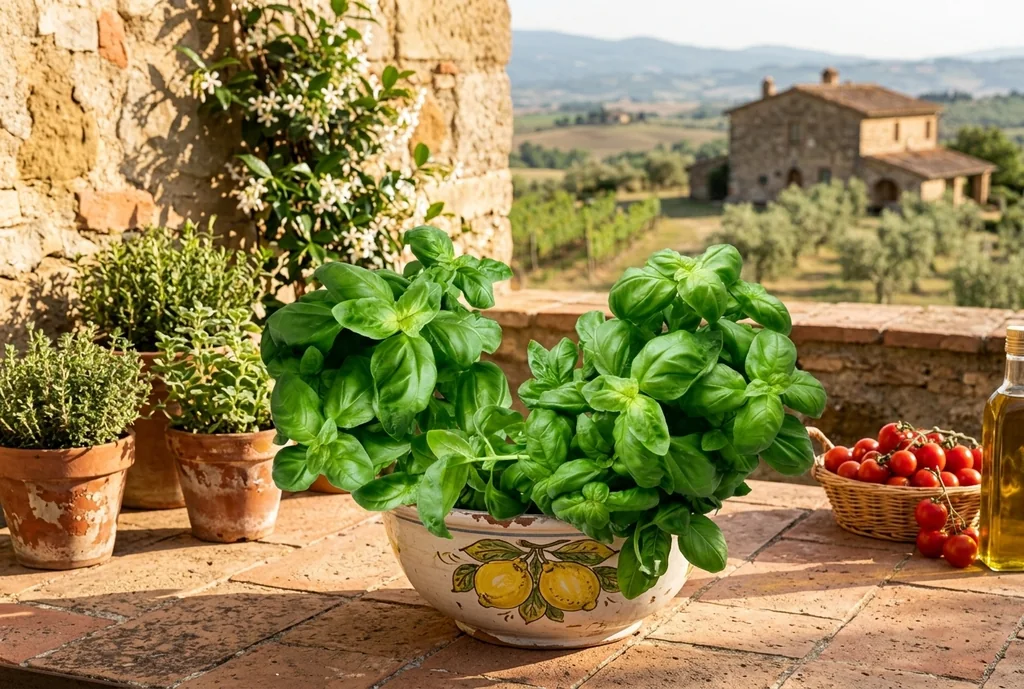
Few herbs are as important in two such different kitchens. In Italy, basil goes into pesto, tomato sauces and caprese, and on top of a margherita. In Thailand, it gives stir-fries and curries their fresh, aromatic lift, as in the street-food classic pad krapao.
But it is not the same basil. Italian sweet basil has soft leaves and a sweet, slightly peppery taste. In Thailand there are mainly two kinds of basil. They look alike but taste different: horapha (Thai basil) tastes of anise and liquorice, while kra pao (holy basil) is more peppery, with a hint of clove.
In your kitchenOne name, two kitchens, and a very different taste on the plate.
How to use it
Choose the right basil
Use sweet basil for pesto and tomato dishes, Thai basil for curries and holy basil for pad krapao. If you cannot find holy basil, Thai basil is the closest choice.
Add it at the end
Heat quickly takes away the flavour of the leaves. Tear them over a pasta just before serving, or stir them into the wok until they have only just wilted.
Keep it out of the fridge
Cold turns the leaves black. Stand a bunch in a glass of water on the worktop, like flowers, or keep a pot in a bright window.