
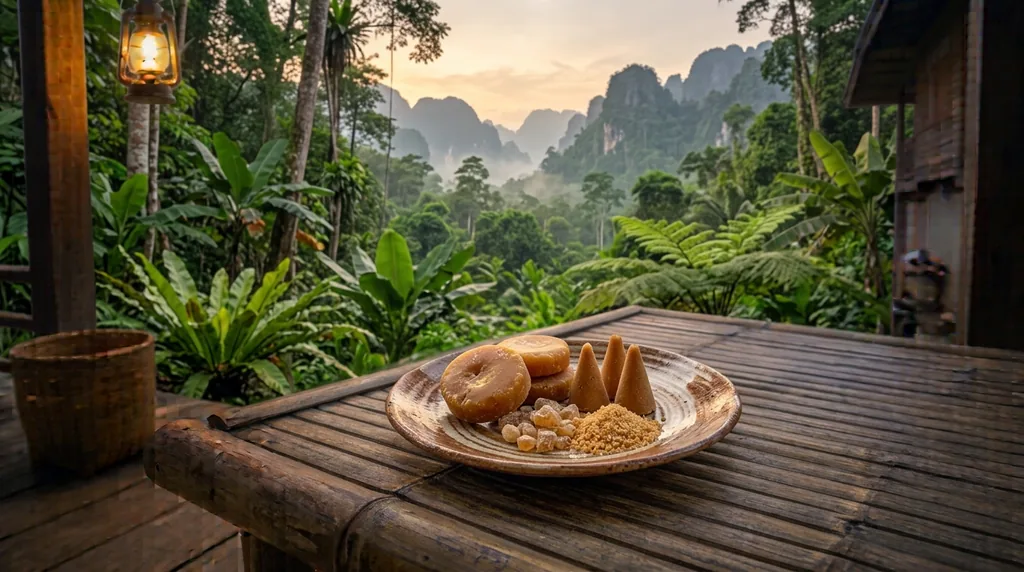
Palm sugar is made from the sweet sap of palm trees. The sap is collected from the flowers of sugar palms or coconut palms, then slowly boiled down until it thickens and sets. In Thailand it is called น้ำตาลปี๊บ, nam tan peep, “tin sugar”, after the large tins it was traditionally sold in. You will find it as hard discs and cones, as soft, fudge-like paste in tubs, or as loose granules.
Its sweetness is softer and deeper than white sugar, with notes of caramel and butterscotch. That is why Thai cooks reach for it: it is the sweet corner of the flavour balance, rounding off the salt of fish sauce, the sourness of lime and tamarind and the heat of chilli. It goes into curries like Massaman and Panang, dressings for som tam, stir-fries, dipping sauces and almost every Thai dessert.
In your kitchenNot there to make food sweet, but to make every other flavour fit together.
How to use it
Shave or crush it
Hard discs and cones are easiest to use shaved with a knife, grated, or crushed in a mortar. Soft palm sugar can simply be spooned out.
Melt it into the dish
Add it to a warm sauce, curry or dressing and stir until it dissolves. For a cold dressing, dissolve it first in the lime juice or fish sauce.
Add it a little at a time
Season with palm sugar the way you season with salt: a little, taste, then a little more, until salty, sour, sweet and hot are in balance.
Store it airtight
Keep it in a sealed jar in a cool, dry place and it lasts for months. If it turns rock hard, warm it for a few seconds or grate it. Brown or muscovado sugar works in a pinch.