
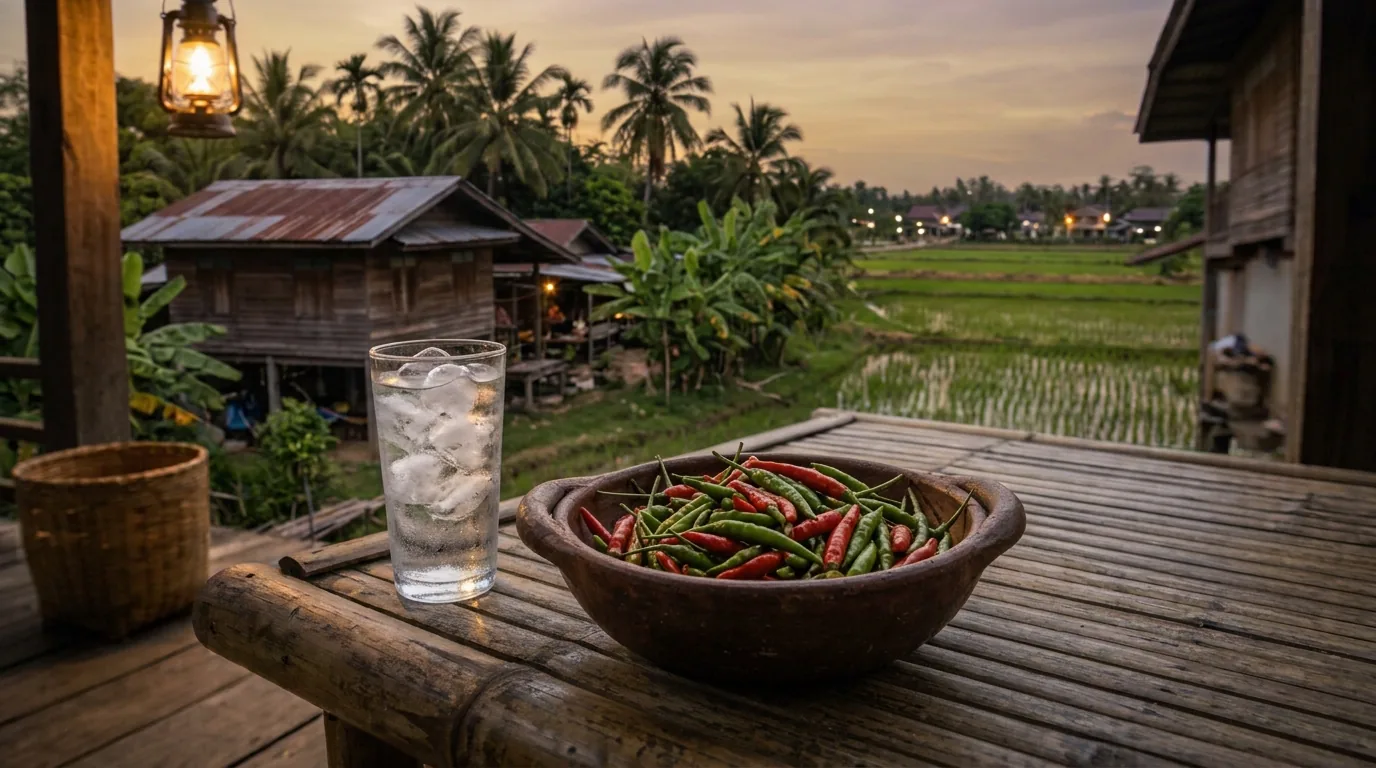
The chilli you meet most often in Thai cooking is prik kee noo, the bird’s eye chilli: small, thin and fiercely hot. It is sold both green and red. Green chillies taste fresh and grassy, while red ones are riper, a little sweeter and more fruity. Larger, milder chillies are used when a dish needs colour more than fire.
In a Thai kitchen chilli comes in many forms. Fresh, it is crushed into soups or pounded with garlic and lime for dressings. Dried and toasted, it becomes the chilli flakes found on every table. Roasted with shallots and garlic, it turns into nam prik pao, the sweet, smoky chilli paste. And heat is never the goal on its own: it is one corner of the balance, together with salty, sour and sweet.
In your kitchenHeat should wake the dish up, not knock it out.
How to use it
Choose your heat
The smaller the chilli, the hotter it usually is. To tame it, cut it open and scrape out the seeds and the pale membrane.
Crush, slice or pound
Crush whole chillies lightly for soups like Tom Yum. Slice them thin for nam pla prik. Pound them with garlic for dressings and curry pastes.
Mind your hands
Wash your hands well after cutting chillies, and keep them away from your eyes. If you handle a lot at once, use gloves.
Keep them in the freezer
Fresh chillies freeze whole in a sealed bag and keep for months. Slice them straight from frozen.