
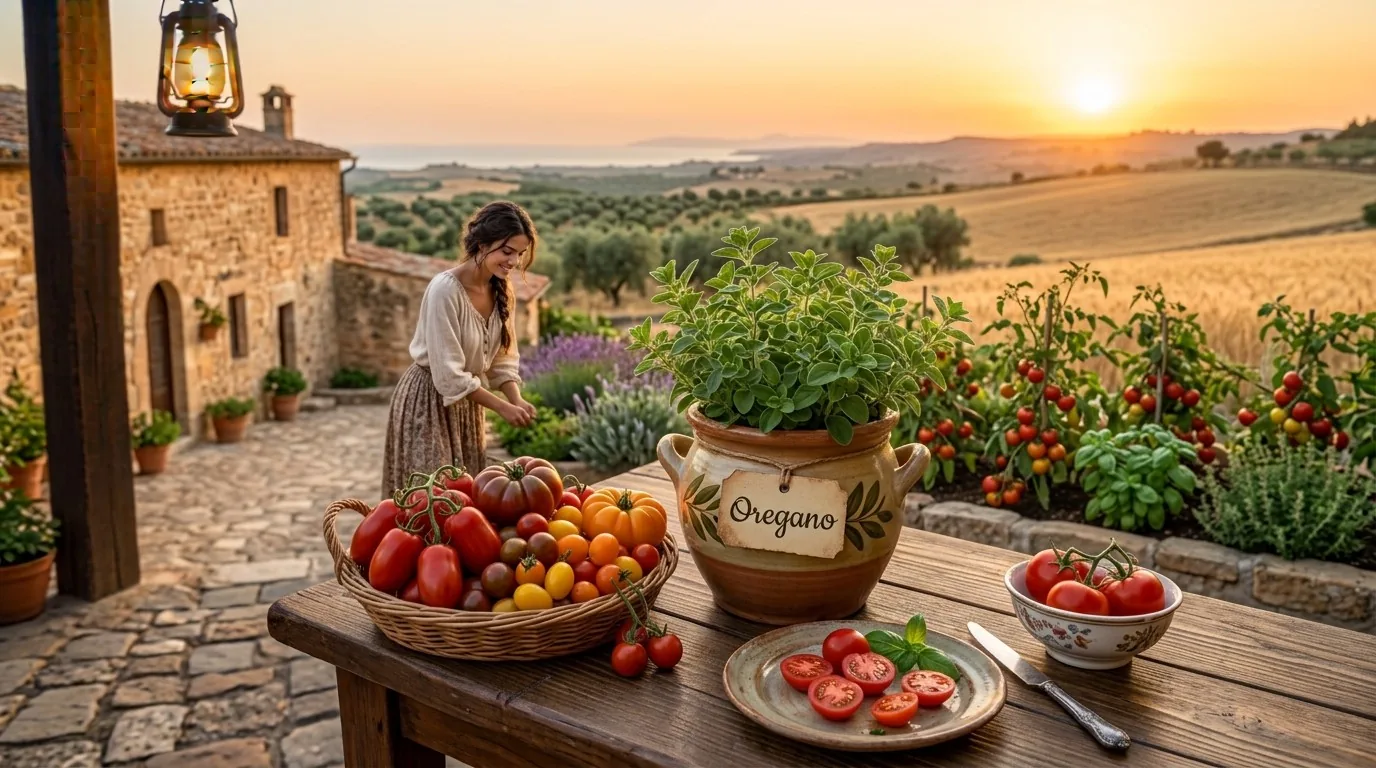
The tomato came to Europe from the Americas in the 1500s, and today the Italian kitchen is hard to imagine without it. It is the base of pasta sauces, pizza and soups, and it is eaten raw with olive oil, basil and salt. In India, tomatoes cooked down with onion, garlic and ginger form the masala base of countless curries, from Butter Chicken to Chana Masala. And in Thailand, cherry tomatoes are pounded with chilli, garlic, lime and fish sauce into spicy salads like som tam, the green papaya salad.
A good tomato tastes sweet and sharp at the same time. In summer, fresh and ripe tomatoes are best. The rest of the year, canned tomatoes are often better than fresh ones, because they are picked ripe and packed straight away. The most famous are San Marzano: long plum tomatoes grown in the volcanic soil near Mount Vesuvius, sweet, low in acid and with few seeds.
In your kitchenOut of season, a good can beats a pale fresh tomato every time.
How to use them
Buy them whole
Choose whole peeled tomatoes rather than chopped, as they are usually better quality. Crush them by hand or with a spoon straight into the pan.
Cook them slowly
For a pasta sauce, warm garlic in olive oil, add the tomatoes and a pinch of salt, and let it simmer for 20 to 30 minutes until thick and sweet.
Salt them raw
Slice fresh tomatoes, sprinkle with salt and wait a few minutes before adding olive oil and basil. The salt draws out the flavour.
Never in the fridge
Keep fresh tomatoes at room temperature, because cold makes them mealy and dulls the taste. For real San Marzano, look for “DOP” on the can.